Understanding Your Deck Identity
Your legend, champion, and 40 cards were chosen for one specific game plan. Knowing what that plan is — and playing TO it — is the difference between drifting and executing.
The Big Idea
Your deck doesn't win games randomly. It wins when its specific game plan works. That plan starts with your legend, runs through your champion, and shows up in every card you brought. If you don't know your deck's plan, you're playing reactively — answering whatever your opponent does, never executing your own line. The first step to consistent wins is naming what your deck IS.
Read your legend
Your legend stays out the entire game. Its ability is the most reliable tech in your deck — you'll see its effect every turn it's relevant. Whatever your legend does is the gravity of your deck.
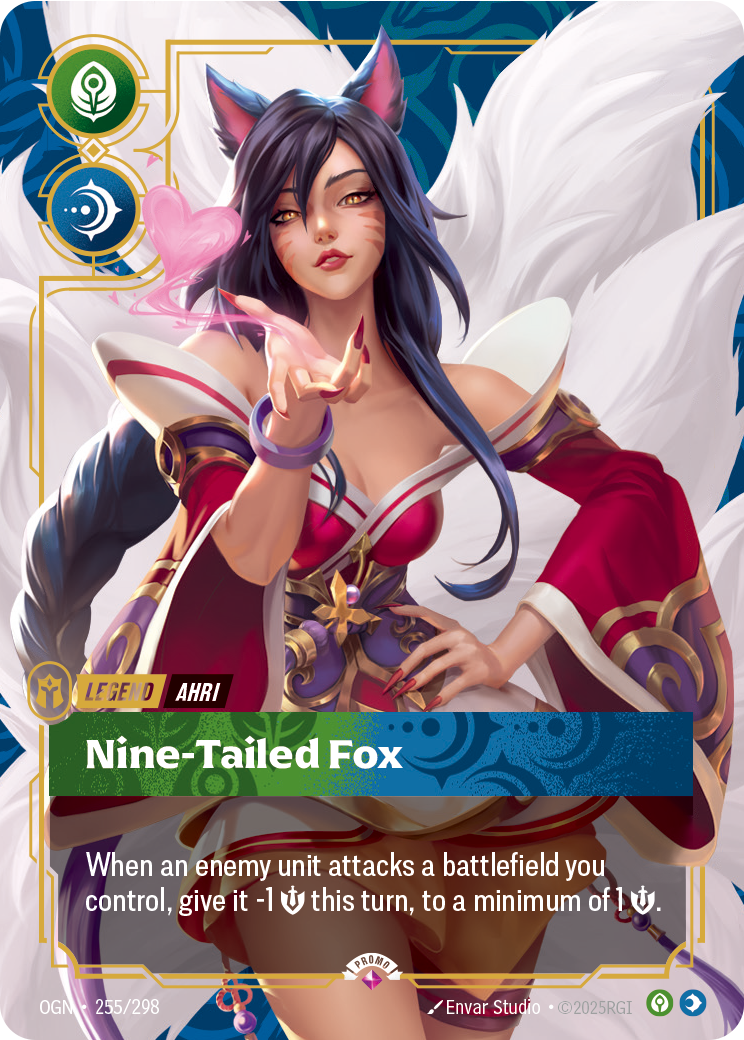
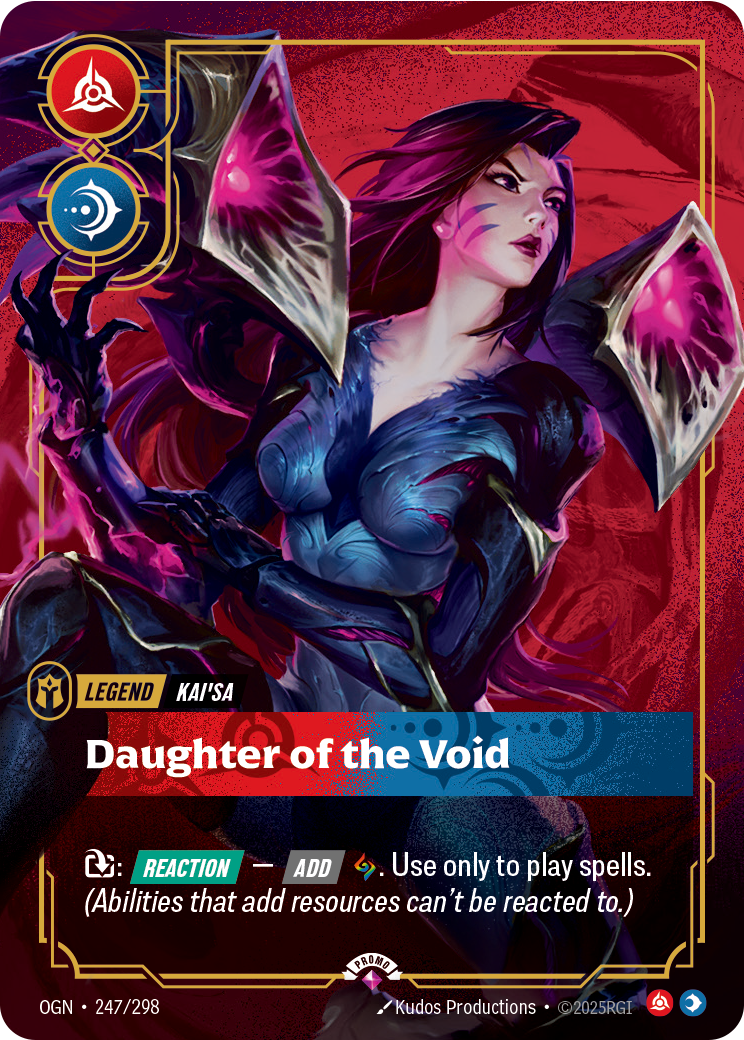
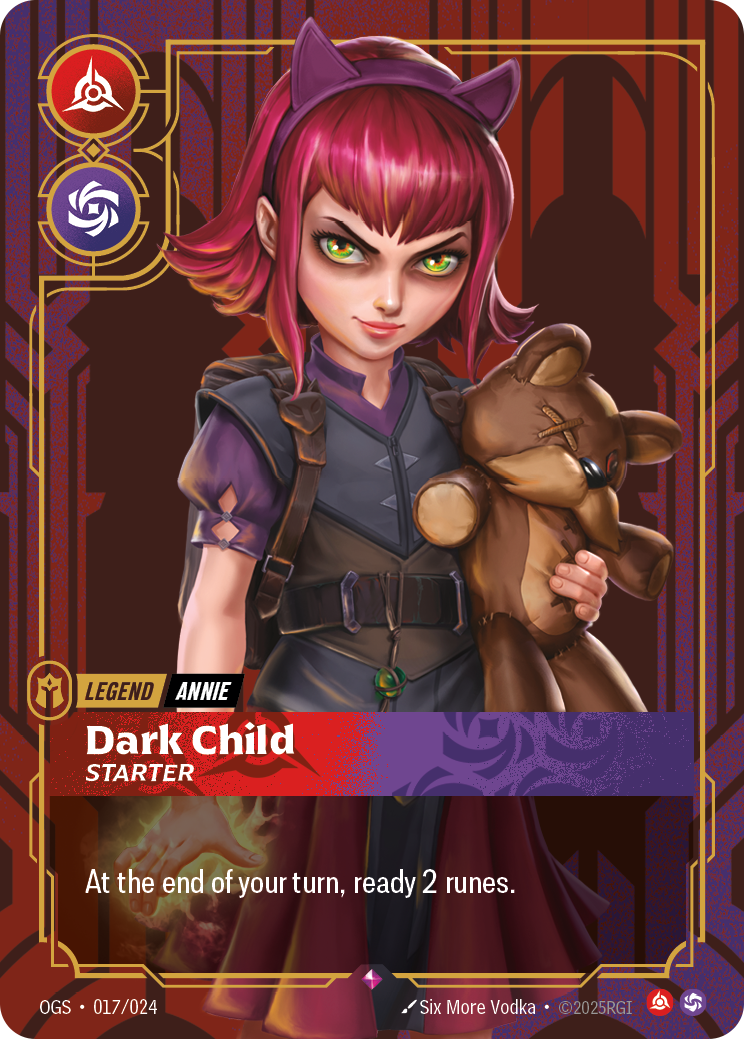
Your legend's ability tells you what KIND of game plan to execute. If you go entire games without your legend's ability mattering, you're playing the wrong style for the deck you brought.
Read your champion
Your champion is the unit your deck is built around. Where the legend defines posture, the champion defines execution. It is an extension of your hand and always available when you need it most. This is where skill expression begins — a legend can choose between the champion units that share its name.
→Ahri — Alluring: When I hold, you score 1 point.
Perfect for a defensive holding strategy — protecting Ahri at all costs.
→Kai'Sa — Survivor: [Accelerate] When I conquer, draw 1.
Accelerate + card draw is the perfect combo to outpace your opponent.
→Annie — Fiery: Your spells and abilities deal 1 Bonus Damage.
Extra punch for a domain that has lots of damage from spells.
Decide your play style
Not every legend and champion combo has to play the same. There are countless ways to execute a winning gameplan. A perfect example is Master Yi:
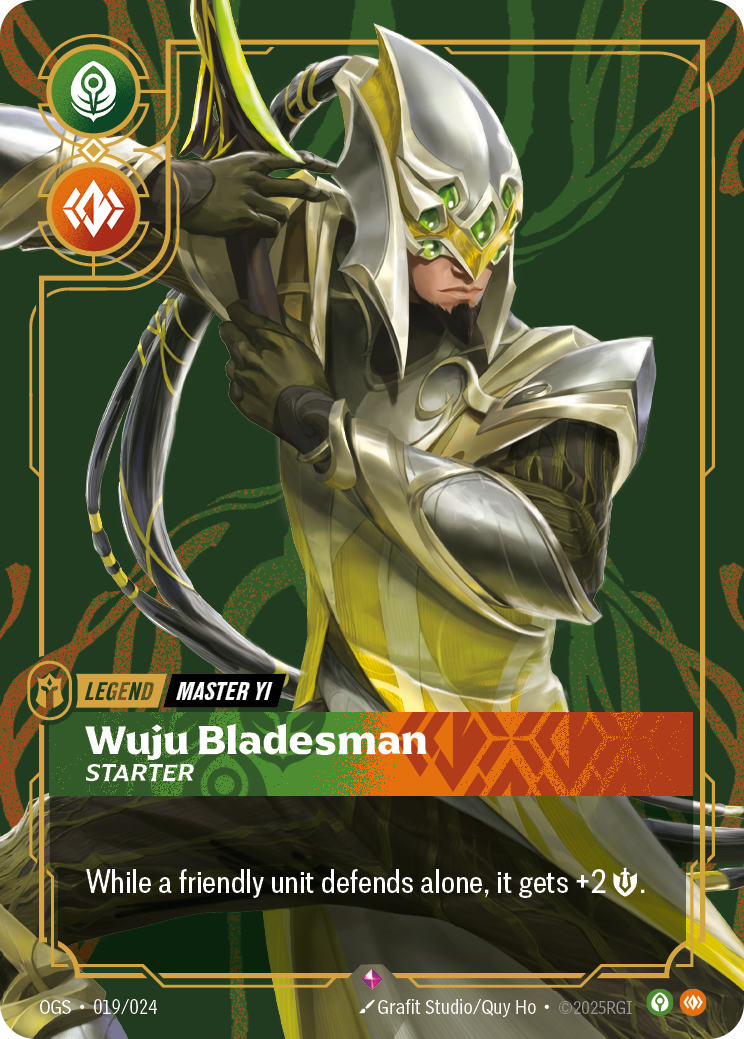
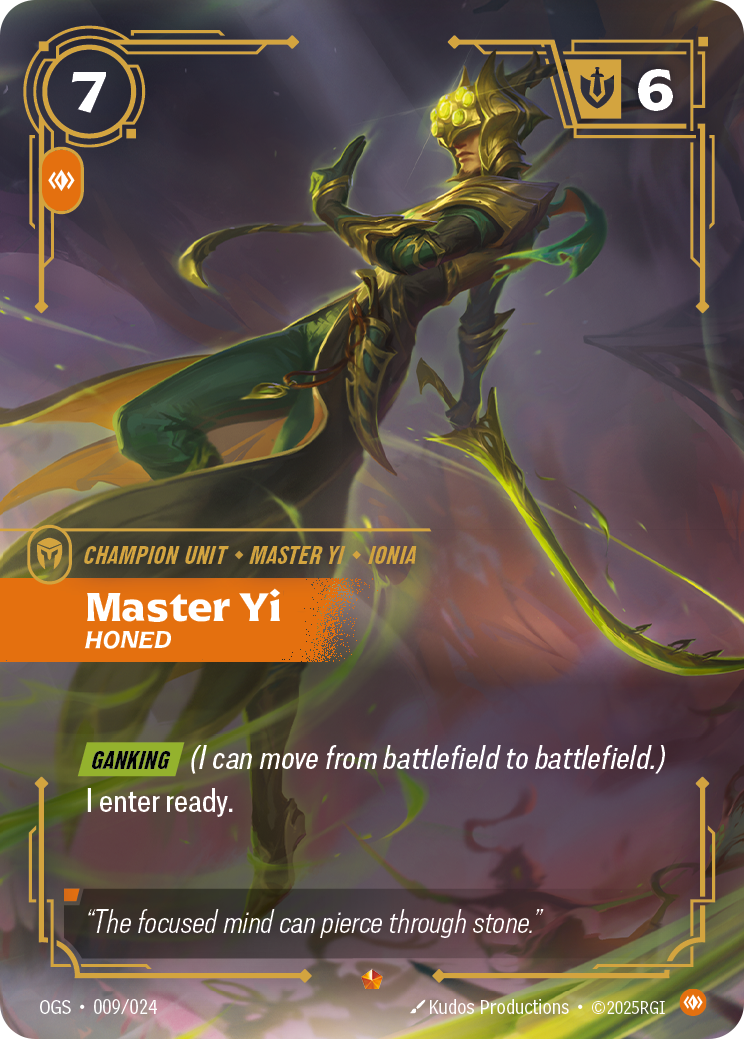
Master Yi has multiple different paths to victory. Two of his most popular builds are Aurora and Midrange.
Aurora
Aurora revolves around the high-impact Gear card Dazzling Aurora. It's a control/ramp strategy focused on cheating high-cost units into play early (often by turn 3-4) to create an insurmountable advantage.
Midrange
A versatile archetype that balances early-game defense with high-impact late-game threats — operating between aggro and control. It aims to disrupt aggression early and outvalue control by “turning the corner” — transitioning from defense to offense in the mid-game, generally around turns 3-6.
Understand your deck
The cards in your 40 weren't picked at random. They were chosen for a reason — usually one of three:
- Threats — units that pressure the opponent or score points directly.
- Answers — removal, counters, debuffs that protect your plan from disruption.
- Engines — card draw, rune manipulation, anything that finds your win-con faster.
A balanced deck has all three. Leaning too hard into one while neglecting the others lets your opponents take advantage of the holes.
Play to your plan, not the opponent's
A common beginner mistake: making every play "optimally" in isolation, without asking does this advance MY plan?
- Aggro decks should not save their hand for the grindy late-game they can't win.
- Control decks should not race aggression they can't out-trade.
- Combo decks should not burn their reactions on threats they don't actually need to answer.
If a play looks "good" but doesn't move your plan forward, it's the wrong play.
Name your win-con in one sentence
Before any match, you should be able to finish this sentence: "I win when ___."
- "I win when Ahri's tax pushes their attackers' might out of range through abilities and battletricks."
- "I win when Annie maintains board control by spending might on my turn and theirs."
- "I win when Kai'Sa manipulates tempo through reduced power and successful spell removal."
If you can't say it, your deck doesn't have a plan — and a deck without a plan loses to one that does.
Tying it all together
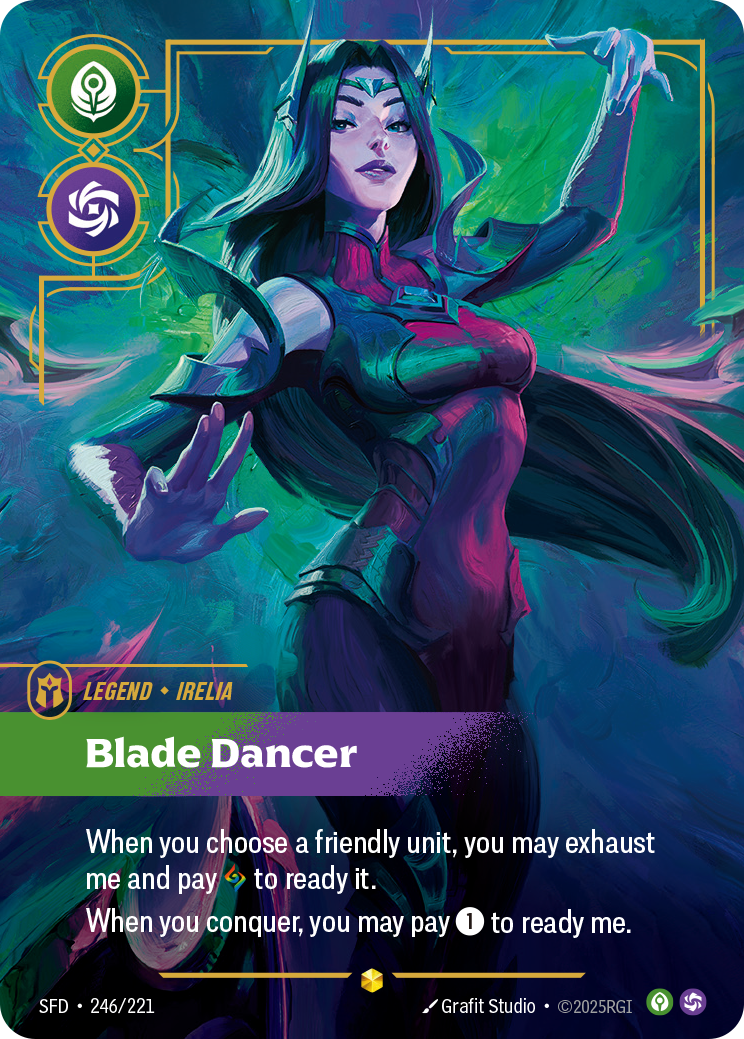
Irelia, the Blade Dancer is the perfect example to close this lesson out. The legend, the chosen champion, and every card in the deck pull in one direction — keep Irelia Fervent on the board.
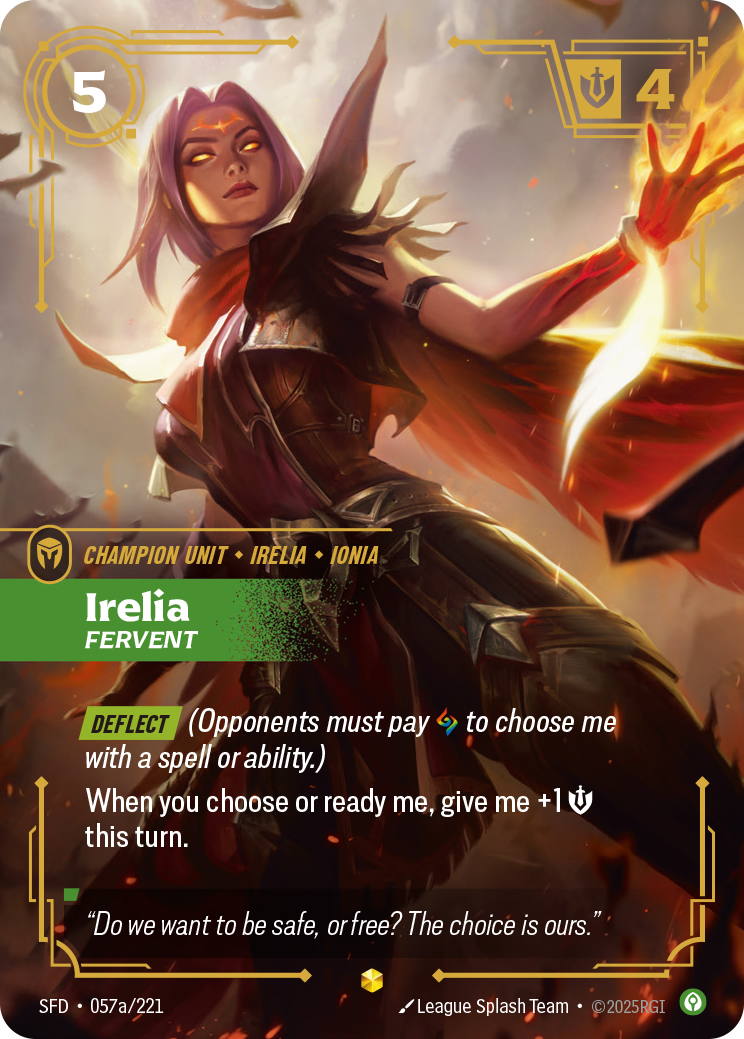
When Irelia Fervent lands on the board she becomes a must-kill target. If the opponent doesn't answer her, the game ends before they can blink. The Irelia player knows this too — which is why most Irelia decks pack a layered toolkit: battletricks, survival, counters, and a few small plan Bs.
Why the synergy is so strong
Irelia Fervent's trigger is simple on the surface: she grows whenever you choose or ready her. Pair that with her legend's ability and the trigger fires more often than the opponent expects — might gains compound fast.
The cleanest example is En Garde:
- En Garde costs 1 energy, and grants +2 might when used on a lone unit at a location.
- En Garde lets you choose Irelia → +1 might.
- Choosing Irelia triggers the legend
- The legend then readies Irelia Fervent → +1 might.
- A 2-might spell turns into a 4-might swing.
A spell, a legend ability, and a champion trigger all stacking off a single play — that's what gives Riftbound its depth, and where skill expression goes from finite to limitless.
The supporting cast
Below are other cards you'll commonly see inside an Irelia deck. Each one exists to support the same plan: keep Irelia alive long enough to win the showdown.
Every one of these cards executes the same gameplan: keep Irelia alive, win combat.