Battlefield Selection
Your three battlefield picks aren't random — they're a strategy. Blind, going first, going second. Each slot has a job, and choosing intentionally wins games before they start.
The Big Idea
Every battlefield you bring has a role. In a best of three, you don't just pick three battlefields you like — you pick three that each serve a specific purpose depending on the game state. The players who treat battlefield selection as an afterthought are handing free percentage points to the players who don't.
Your three slots map to three situations: Blind, Going First, and Going Second. The order you play them depends on what you know — and what you don't.
The three slots
Blind — Game 1
Game 1 is decided by a dice roll. You don't know if you're going first or second. Your blind battlefield needs to account for both.
The goal here is a battlefield that helps your game plan without being attractive enough for your opponent to all-in on. You want the text to quietly work in your favour. If the opponent reads your battlefield, shrugs, and focuses on their own — that's a win. If they look at your battlefield and immediately decide that's the one they need to contest at all costs, you've given them a reason to fight on your turf with full commitment.
A good blind battlefield is one where:
- The effect subtly supports your deck's strategy without screaming it
- Your opponent gains little or nothing from holding it themselves
- You're comfortable playing around it whether you're attacking or defending
Going First
After game 1, the loser chooses who goes first in game 2. If you're going first, this is your power battlefield.
Play the battlefield that gives you the most advantage when you're the aggressor. You get to act first, which means you're the one setting the tempo. Your battlefield should amplify that — effects that reward attacking, effects that punish passive play, effects that compound when you're the one dictating the pace.
This is the battlefield you actively want to fight on. You're going first, you're bringing the pressure, and the field should make that pressure harder to answer.
Going Second (opponent acts first)
This is the battlefield you play when the opponent gets to move first. You're on the back foot, which means your battlefield might get contested before you can set up on it.
Play the battlefield you're completely fine never holding. If the opponent takes it and sits on it, that should cost them more than it gains them — or at minimum, it shouldn't accelerate their game plan. Meanwhile, you focus your resources on the other battlefield where you can actually compete.
A good going-second battlefield is one where:
- The hold effect is weak or irrelevant to your opponent's strategy
- You don't need it to execute your win condition
- Losing it doesn't change your overall game plan
Why this matters
Most players just bring three battlefields they think are "good" and play them in whatever order feels right. That works until you play someone who's being intentional about it.
The difference is information. Game 1, you know nothing — play safe. Game 2 and 3, you know everything — play sharp. You know your opponent's deck, their tendencies, their win condition. Your battlefield choices should reflect that knowledge.
Think of it this way: your blind battlefield is a hedge. Your going-first battlefield is a weapon. Your going-second battlefield is a throwaway. Each one has a job, and when you pick three battlefields that all try to do the same thing, none of them do their job well.
Battlefield examples
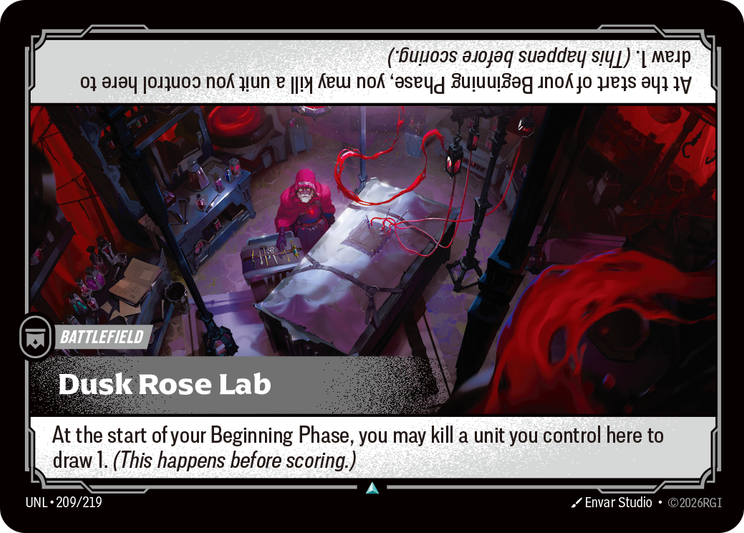
Dusk Rose Lab
Strong blind pick. Dusk Rose Lab technically lets the opponent benefit too — but only if they're running a specific type of deck. This battlefield shines when you're sprite-heavy, and that's not a common archetype. Most opponents you'll face can't get card draw off this without losing something in return. That's what makes it a great game 1 play: it quietly works for you while offering your opponent very little reason to all-in on it.
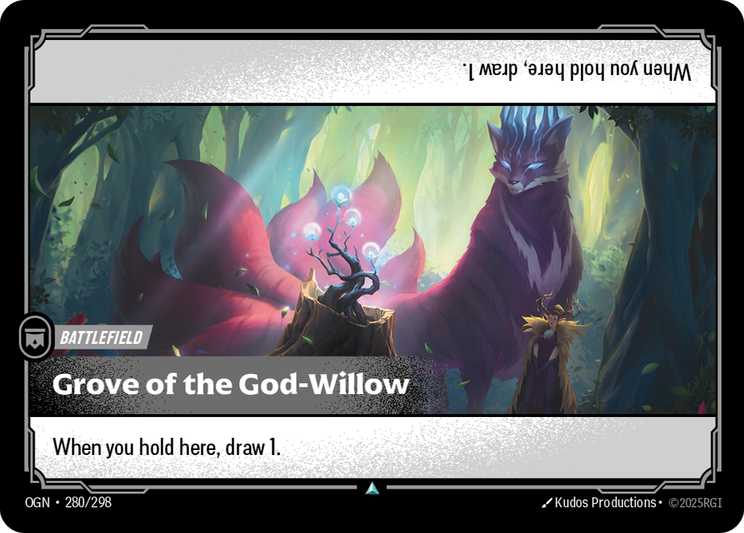
Grove of the God-Willow
Going first only — unless you have an extremely good reason to bait an opponent onto it. Grove is a powerhouse: it gives you card draw every time you hold it. That kind of sustained advantage snowballs fast. If you play this blind or going second and your opponent takes it from you, the card advantage it generates will almost certainly bury you. Don't hand your opponent a draw engine — save this for when you're the one acting first and can establish control before they have a chance to contest it.
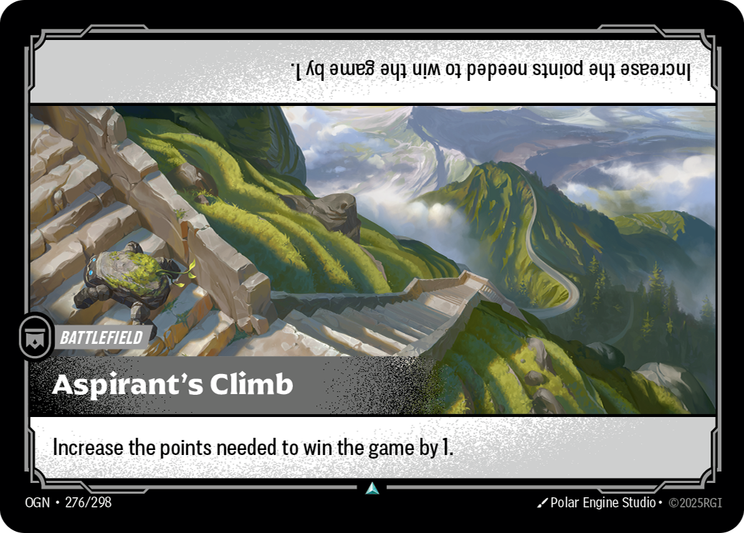
Aspirant's Climb
Ideal going-second pick. Aspirant's Climb changes how the game's win condition operates — it bumps the target from 8 points to 9. That seems small, but when you're going second it typically buys you one extra turn of gameplay. One more turn to stabilize, one more turn to find your answer, one more turn to flip the tempo. That single turn can be the difference between losing on curve and clawing your way back into the game. Now you just have to worry they don't play Aurora...
Adjusting on the fly
The blind / first / second framework is the starting point, not a script. Matchup knowledge changes everything.
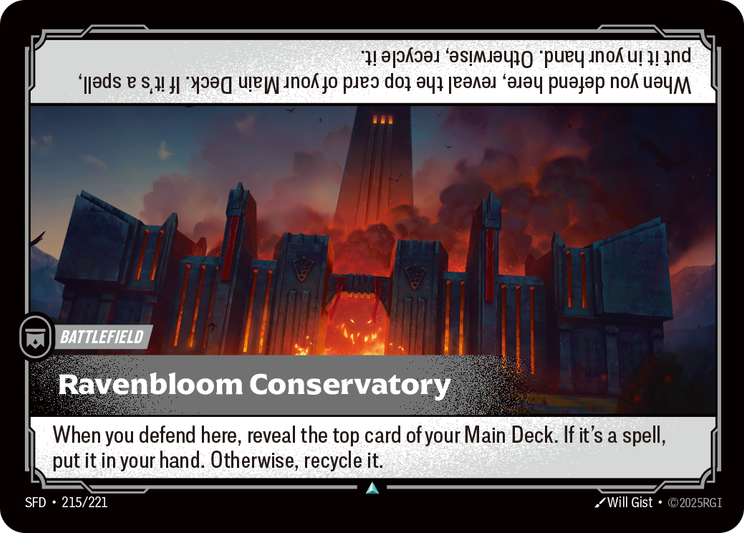
Take this battlefield — it's typically a spell wielder's blind pick. It rewards a spell-heavy deck with extra draw and options when a showdown begins. Sounds like a perfect blind choice for that archetype. But what happens when a spell-heavy deck plays another spell-heavy deck?
Asymmetry joins the battle. When you see your opponent's legend, you should already have an idea of the types of cards they could be running. Ornn and Azir are gear-heavy. Darius runs units. But Diana, Vex, Ahri, Lillia, Irelia — all of them could have 50%+ spells in their deck. Suddenly your "safe" blind battlefield is giving your opponent the same advantage it gives you.
When that happens, you have to adjust. Do you still blind this on a dice roll and hope you get more out of it than they do? Or do your other battlefields make more sense for this specific game? The answer changes every match — and that's the point. The players who get the most out of battlefield selection are the ones who treat it as a living decision, not a locked-in order decided during deck building.