Lethal Points
Not every point is worth taking. High-level Riftbound is about managing scoring patterns and setting up lethal turns — not blindly conquering whenever you can.
The Big Idea
Scoring a point is not always good. Every point you take has a cost — units committed, spells burned, runes spent. The question isn't "can I score?" — it's "does this score advance my winning pattern while preserving my ability to close the game?"
Riftbound has two fundamental win conditions, and they demand very different scoring rhythms. Understanding which one your deck is built for — and which one your opponent is built for — is what separates players who take points from players who take games.
Two strats to win: Conquer or Hold
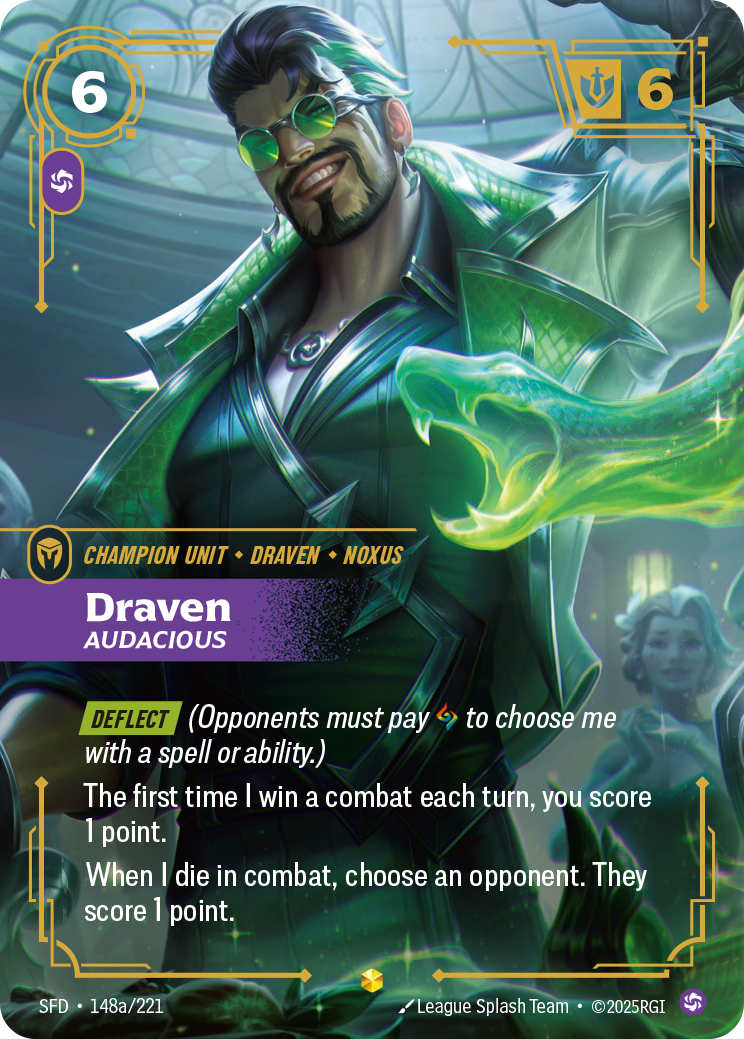
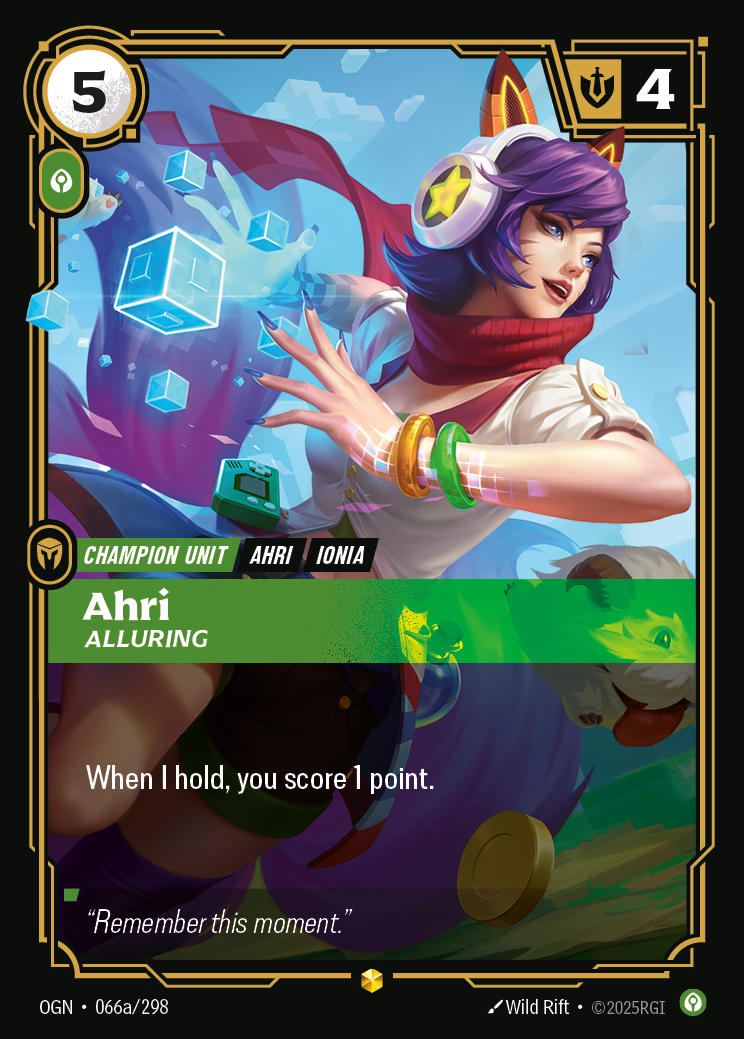
Conquer decks
Conquer decks aim to hit 6 points, then win by conquering both battlefields in one turn. They're aggressive, proactive, and built to retake ground.
A typical conqueror score line looks like: 2 → 4 → 6 → win.
That's the shortest line to victory. It may not always be a clean 2 point turn every play but the main goal is to land at 6.
These decks are fine trading battlefields back and forth. They're built to re-establish board presence quickly and push through when the window opens. They don't need to hold anything — they need to hit the threshold and then execute a single decisive turn.
Going from 6 to 7 is often meaningless for a conqueror. You still need a double conquer to win, and that extra point cost you resources you could have saved for the turn that actually ends the game.
Hold decks
Hold decks aim to reach 7 points, then win by successfully holding a battlefield through the opponent's turn. They're slower, more controlling, and built to outlast.
Hold decks don't race — they disrupt. Their game plan is to break the opponent's scoring rhythm, force awkward attacks, and grind out value until holding a single battlefield becomes inevitable.
They lean on reactive cards, efficient removal, and units that are hard to dislodge. Where a conqueror deck says "I'll take it back," a hold deck says "you're not taking it at all."
Lethal range
Once a player reaches around 6 points, the game changes. They might be able to end it next turn. This is lethal range — and recognizing it transforms how both players behave.
When your opponent enters lethal range:
- You can no longer play on autopilot. Every attack has to account for the possibility that they close next turn.
- Defensive positioning matters more than incremental scoring. A point that costs you a key unit might hand them the win.
- You need to answer the question: can they actually close? If they're a conqueror at 6, do they have the board to double-conquer? If they're a hold at 7, can they actually hold through your turn?
When you enter lethal range:
- Stop scoring unless it wins the game. Extra points beyond your threshold are vanity. Resources are real.
- Set up the kill turn. Everything should be pointed toward making one turn lethal — not accumulating small advantages that don't close.
- Force your opponent to respect the threat. Even if you can't win this turn, making them play scared creates openings.
Not all points are equal
This is the hardest habit to break: the instinct that scoring is always progress. It isn't.
A point that costs you a critical unit is often a net loss. If you trade your best attacker for a single point and then can't threaten the battlefield next turn, you've scored a point and lost your win condition.
A point that doesn't advance your pattern is noise. If you're a conqueror at 5 and you score to 6, that's meaningful — you've entered lethal range. If you're at 6 and you score to 7, you've spent resources for a number that doesn't change your win condition.
Sometimes the correct play is to not attack. If your opponent is low on resources and you have board control, holding your units back and denying them targets can be stronger than pushing for a point they'll just retake.
Think of it like this: every point costs something. The ones that matter are the ones that move you closer to ending the game. The ones that don't are just spent resources with a number attached.
Units are resources, not permanent advantage
Because units heal and reset between combats, they're not permanent board advantage — they're expendable assets. The skill test is knowing when to sacrifice them for points and when to preserve them for the kill turn.
Throwing two units at a battlefield to score 1 point might feel productive. But if those were the units you needed to double-conquer next turn, you've traded your win condition for a number that doesn't win by itself.
The calculation is always the same: what does this cost me, and does what I gain bring me closer to winning — not just closer to a higher score?
The last point rule
The final point that wins the game has a special requirement: you must properly score it. You can't partially trigger a win — you need to fully satisfy the win condition on the turn you claim it.
For conquerors, that means actually conquering both battlefields in one turn. For holders, that means actually surviving the opponent's full turn with a battlefield held.
This is why the last 1–2 points are disproportionately hard to get. Your opponent knows what you need and will throw everything at preventing it. Players who set up the endgame two turns in advance — rather than hoping to top-deck into it — are the ones who close.
Why certain cards are elite finishers
This framework explains why some cards seem overpowered at high-level play even though their raw stats aren't remarkable:
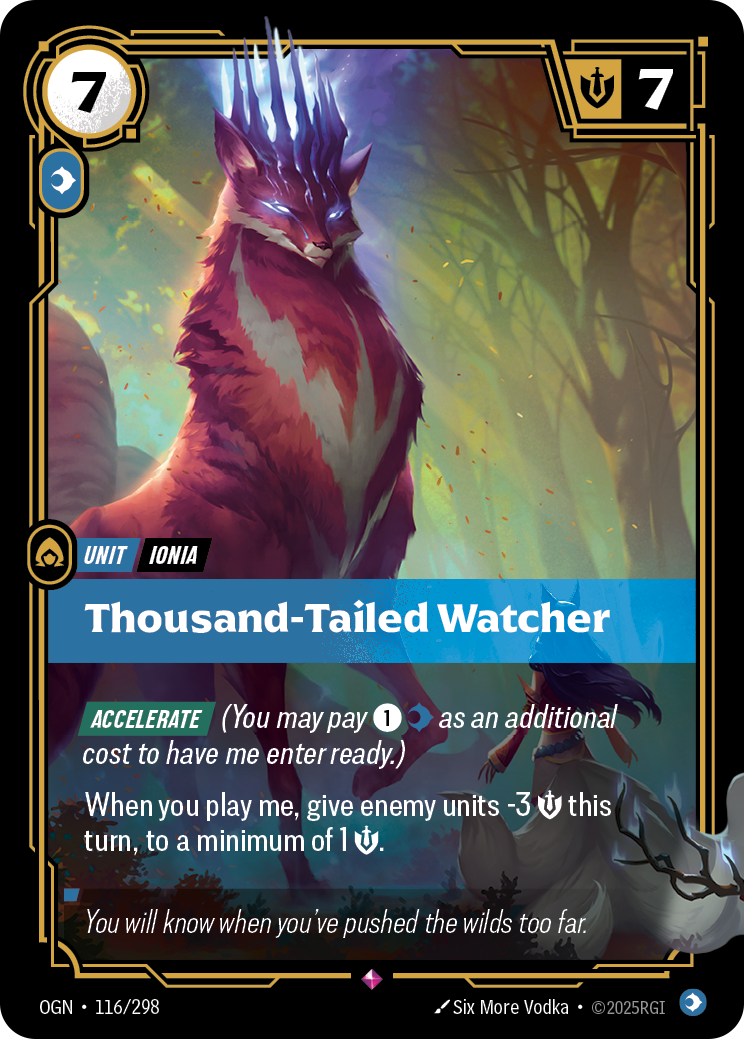
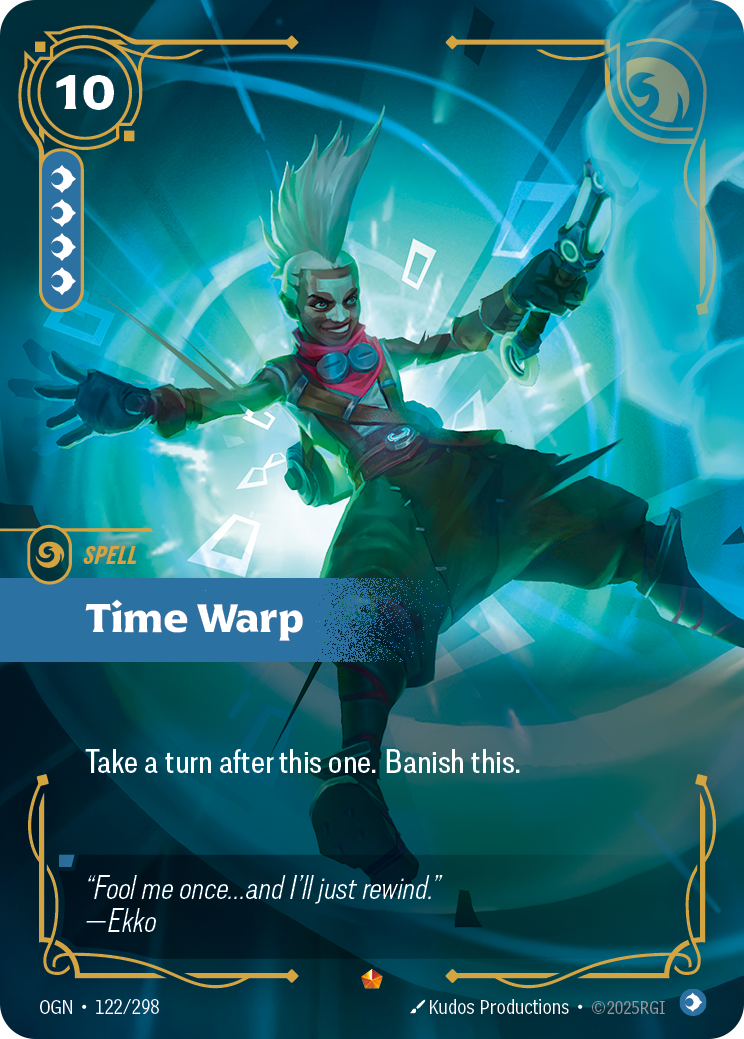
Thousand-Tailed Watcher and Time Warp are powerful because they let you manufacture a lethal turn that shouldn't exist. They create windows where your opponent thought they were safe — an extra combat step, an unexpected board reset — and that's when games end.
The best finishers aren't the ones with the biggest numbers — they're the ones that give you the most control over when and how the game ends.
Conquer vs Hold — where the meta actually sits
Both strategies are legitimate paths to victory. In theory, they're balanced — conquerors trade speed for vulnerability, holders trade speed for resilience. In practice, early Riftbound has overwhelmingly belonged to the point chasers.
Aggressive conquer strategies dominate for a simple reason: the card pool makes attacking far easier than defending. Movement spells let you reposition units at will. Direct removal pulls defenders off battlefields and out of bases without ever entering combat. Buff spells create might gaps that are mathematically impossible to recover from. And unfair trades — effects that let you remove or neutralize a unit without committing one of your own — mean a hold can lose their entire defensive setup to a single well-timed card.
The math is brutal for holders. To successfully hold, you need to:
- Spend resources on your turn to establish the position — units on the battlefield, spells ready, runes committed.
- Still have resources left over to defend that position through the opponent's entire turn.
- Have the right cards in hand to answer whatever they throw at you — not just resources, but specific answers to specific threats.
That's a lot to ask every single turn. And holding decks, by nature, lead to longer games with more turns. The more turns a game lasts, the more times you need to have the answer. The probability of having the right card at the right time every turn is slim — and it only gets slimmer as the game drags on.
When a hold deck's wall cracks, it cracks for good. Conquer decks can lose a battlefield and retake it — that's what they're designed to do. Hold decks can't afford that. A single turn where the defense fails typically causes irreparable tempo loss: you've spent your resources defending a position that no longer exists, and now you're behind on board, behind on cards, and facing a board state you can't recover from. One breach often cascades into a loss.
This doesn't mean holding is unplayable — it means it's harder to execute and less forgiving when it goes wrong. The meta is always shifting. New sets bring new mechanics, abilities, and strategies that can reshape the balance between aggression and control. But so far, the players who chase points aggressively and close with a decisive conquer turn have been more consistently rewarded than the players who try to build an impenetrable wall and wait.
If you're drawn to a hold strategy, go in with your eyes open: you're choosing the harder path, and you need to be right more often than your opponent needs to be aggressive.
Reality
Nothing above is a formula. Riftbound isn't cookie cutter — every game plays out differently, and the best players adapt to what's in front of them, not what a guide told them to do. A great pilot can turn a losing position into a win through sharp decision-making, creative sequencing, and reading their opponent one step ahead.
Holding is harder, but it's not impossible. And the line between conquer and hold isn't always clean. Some of the most dangerous decks in the game blur it entirely.
Take Irelia. She can feign lethal from 5 points — a score that looks safe to most opponents. Cards like Ride The Wind let her potenitally conquer a battlefield on the opponent's turn, setting up a hold. If that hold sticks, she only needs a single conquer on her following turn to reach 8 and close the game. The opponent thought they had breathing room at 5. They didn't. That's not a conquer line or a hold line — it's both, stitched together in a sequence the opponent never saw coming.
That's the real depth of this game. The frameworks in this article — conquer vs hold, lethal range, point efficiency — are tools for thinking, not rules for playing. Every game presents encounters and board states that no guide can predict. The player who wins is the one who recognizes which tool fits the moment and has the flexibility to switch when the game demands it.
There are infinite paths to 8. The good players know the common ones. The great players find the ones that don't exist yet.
The real question
Next time you have an attack that scores a point, pause and ask:
- Does this point advance my win pattern? If you're a conqueror at 4, scoring to 5 doesn't enter lethal range. If you're at 5, scoring to 6 does. That difference matters.
- What does it cost? Units, spells, rune commitments. Can you still close the game after paying this price?
- Does my opponent want me to take this point? If they're offering a free trade, ask why. Sometimes they're baiting you into over-committing so they can retake and close on their turn.
High-level Riftbound isn't about racing to 8 — it's about building toward a single turn where the game ends on your terms.